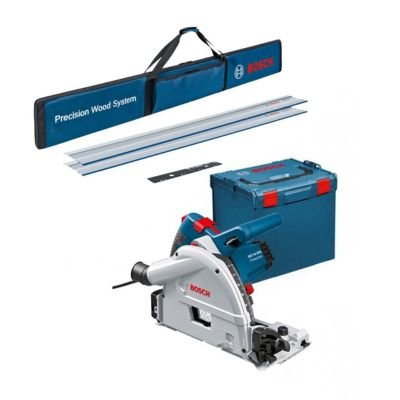
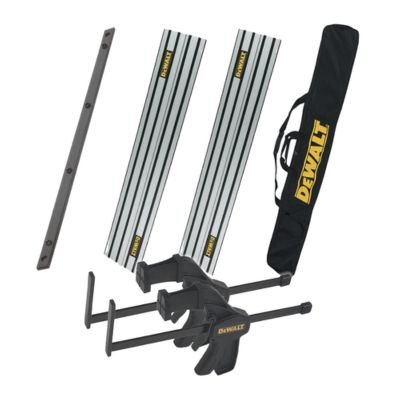
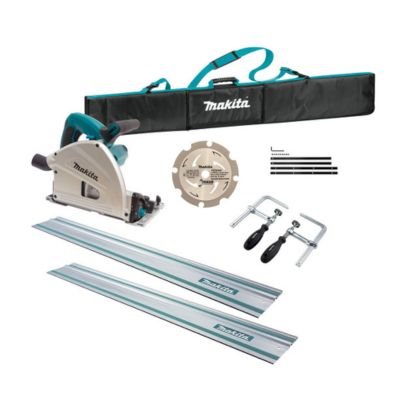


♥ Wishlist
Compare 21 verified Plunge Saw Accessories for Precise, Controlled Cutting products in United Kingdom. Reviews, ratings, pros, cons and buying advice updated for October 2026.




The best plunge saw accessories are not necessarily the accessories with the longest feature lists. The useful choice is the one that matches your saw, guide-rail system, materials, cutting method and frequency of use. A professional joiner cutting sheet material every day has different priorities from a DIY user making occasional cabinet, flooring or worktop cuts.
Before buying anything, identify the exact plunge saw model and guide rail you own. Accessories that look interchangeable can use different rail profiles, mounting arrangements, connector systems or dimensions. Compatibility should therefore be treated as a specification to verify rather than an assumption based on appearance or brand reputation.
For many plunge saw users, the guide rail is the foundation of the entire accessory system. It determines how the saw is guided, how accessories attach, where clamps can be positioned and which connectors or stops can be used.
Buying accessories from the same manufacturer can simplify compatibility, but brand matching alone does not guarantee that every accessory will fit every saw or rail in that manufacturer's range. Product generations, rail profiles and attachment systems can differ.
This is particularly important when combining equipment from manufacturers such as Festool, Makita, Bosch, DeWalt, Milwaukee, Triton, Evolution or Mafell. Some systems share elements of their rail design, while others use more proprietary arrangements. Always verify the manufacturer's stated compatibility for the specific model numbers involved.
A good guide rail provides a straight reference for the saw and can make repeatable sheet-material cuts substantially easier than working from a hand-drawn line alone. Rail length should correspond to the type of work you normally undertake.
A shorter rail can be easier to transport and position for compact workpieces. Longer rails are useful when making uninterrupted cuts across large sheets, doors, worktops and panels. If your typical cuts exceed the length of a single rail, investigate the manufacturer's joining system before buying.
Do not judge a rail solely by its length. Consider its stiffness, underside grip, splinter protection, connection system, compatibility and ease of storage.
Rail connectors are important when a single guide rail is not long enough for the cut. The purpose is not merely to hold two rails together; the joint also needs to maintain a sufficiently straight and stable path for the saw.
Clamps can be valuable when the material, work surface or cutting direction makes the rail difficult to keep stationary. They are particularly useful when movement of even a few millimetres could spoil an expensive panel.
However, not every cut requires clamps. Some rails incorporate high-friction strips designed to resist movement on suitable surfaces. Whether additional clamping is appropriate depends on the material, surface condition, rail design and cutting operation.
When choosing clamps, check that they can be positioned without interfering with the saw's travel. A technically compatible clamp is of little benefit if it restricts the cut or forces an awkward setup.
The splinter guard, sometimes referred to as an anti-splinter strip or splinter protection strip, is a consumable component of many guide-rail systems. It establishes a close reference alongside the blade and can help reduce breakout at the edge of the cut.
Over time, the strip can become worn, damaged or inaccurately trimmed. If the strip is no longer providing a clean reference, replacing it can be more sensible than attempting to compensate by changing cutting technique.
Always use a replacement strip intended for the relevant rail. After installation, follow the manufacturer's instructions for trimming or setting the strip before relying on it as a cut reference.
Guide rails rely on different combinations of underside grip and saw-to-rail running surfaces. These components deserve attention because accumulated dust, damage or wear can affect how confidently the rail sits and how smoothly the saw travels.
Keep the contact surfaces clean and inspect them periodically. If a strip is damaged, lifting, contaminated or excessively worn, consult the manufacturer's replacement guidance rather than improvising a substitute.
A parallel guide can be useful when you need repeated cuts at a consistent distance from an edge. It can turn a plunge saw from a tool for one-off straight cuts into a more repeatable system for batch work.
Before buying a parallel guide, check its adjustment range and the dimensions of the workpieces you normally cut. Also consider whether the guide can be used on the side of the saw and rail arrangement required for your particular operation.
If your work involves repeated cross-cuts or angled cuts, an angle guide or dedicated cross-cutting accessory can be more convenient than manually marking every cut. These accessories can help establish repeatable angles, but their usefulness depends on the size and type of material being cut.
For occasional angled work, a conventional guide rail and carefully checked marking may be sufficient. For repeated production work, a dedicated angle or cross-cutting accessory can save setup time.
Long aluminium guide rails are awkward to store and transport. A suitable carry bag or storage solution can protect the rail from damage while making it easier to transport to a job site.
Storage is not simply a convenience issue. A bent rail, damaged edge or contaminated running surface can affect cutting accuracy. Store rails where they are supported along their length and protected from impacts.
The guide rail determines where the saw travels, but the blade determines how it cuts. Choosing a blade solely because its diameter matches the saw is therefore not enough.
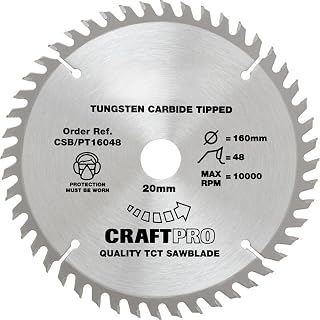
The replacement blade must match the saw's specified diameter and mounting requirements. The bore, kerf, tooth configuration and maximum permitted speed also need to be appropriate for the machine.
Never assume that a blade is suitable simply because it physically fits the spindle. Consult the saw and blade manufacturer's specifications before installation.
Tooth count influences the balance between cutting speed, finish and material suitability. A higher tooth count can be appropriate when a clean finish is important, while a lower tooth count may prioritise faster cutting in suitable materials.
There is no universally best tooth count. The ideal choice depends on the material, thickness, required finish and saw.
Kerf is the width of material removed by the blade. It matters because plunge saws and their accessories are designed around particular blade and cutting arrangements. Using an unsuitable blade can affect cutting behaviour, extraction and the relationship between the blade and the guide system.
Consider separate blades when you regularly cut substantially different materials. A blade optimised for clean cuts in veneered or laminated sheet material is not automatically the best option for every timber product.
Dust extraction is an important part of a plunge saw setup, particularly when cutting MDF, fibreboard and other materials that generate significant fine dust.
Check the extraction port size, hose compatibility and manufacturer's recommendations for the saw and extractor. An improvised connection can reduce convenience and may interfere with the saw's movement.
Compatibility is one of the easiest areas to overlook when shopping for plunge saw accessories. Use the following process before ordering.
There is no single accessory ecosystem that is best for every user. Festool, Makita, Bosch and DeWalt all have established power-tool systems, but their accessories should be assessed on compatibility, application and total ownership requirements rather than brand name alone.
Festool is particularly relevant to buyers building a dedicated professional cutting system around its plunge saws and guide rails. Its ecosystem includes rails, connectors, clamps, guides and other accessories intended to work together.
The main consideration is whether the broader ecosystem provides enough practical benefit for your workload to justify its position in your buying shortlist. Occasional users should compare the complete setup rather than judging a single premium accessory in isolation.
Makita offers a broad range of power tools and accessories, making it an important option for buyers who already use its battery or workshop ecosystem. When considering Makita accessories, check the precise saw and rail compatibility rather than assuming that all Makita guide systems are interchangeable.
Bosch has its own guide-rail arrangements and accessories, so buyers should identify the relevant rail family before purchasing. Bosch's professional and consumer tool ranges can have different accessory requirements, making exact model identification particularly useful.
DeWalt is another major option for users who already operate within its cordless tool ecosystem. Its plunge-saw accessories should be checked against the exact saw and rail models because rail systems are not universally interchangeable simply because they perform the same function.
Other manufacturers can also be worth considering, especially where their accessories match an existing tool collection or offer a particular feature you need. The same rule applies: compare the specification and compatibility information for the exact product rather than selecting on brand recognition alone.
When comparing two accessories, avoid reducing the decision to price and review score. A more useful comparison considers how the product affects the entire cutting workflow.
First establish whether it fits your saw, rail and other accessories. An inexpensive accessory that requires additional components may ultimately be less economical than a correctly matched product.
Look for materials and construction appropriate to the environment in which the accessory will be used. Aluminium rails, metal connectors and durable adjustment mechanisms can be particularly relevant for frequent site use, but the correct specification matters more than simply choosing the heaviest product.
For cabinetry, worktops, furniture panels and other precision work, repeatability can be more important than headline cutting speed. Look for accessories that help establish a consistent reference and minimise setup variation.
An accessory that is theoretically precise but awkward to adjust can become frustrating during repeated cuts. Check how settings are made, locked and repeated.
Site users should consider the total size and weight of the system, including rails, clamps, bags, connectors and accessories. A long rail can be excellent for large sheets but inconvenient if it must be transported frequently in a small vehicle.
Consumable components such as splinter strips and certain running surfaces can eventually need replacement. Before committing to a system, consider whether the manufacturer provides appropriate replacement components for the accessories you expect to use heavily.
This is one of the most expensive mistakes because a rail can be a substantial purchase. Always confirm compatibility with the exact saw model before ordering.
Two rails can look almost identical while using different locking, anti-tip or accessory arrangements. Visual similarity is not a compatibility specification.
Longer is not automatically better. Choose a length that suits the materials and workspace you actually use. A very long rail can be difficult to store, transport and position.
A guide rail system may require replacement splinter protection or other consumable components. Include these future requirements when assessing the total cost of ownership.
Tooth count is only one part of blade selection. Diameter, bore, kerf, material suitability and the manufacturer's recommended specifications also matter.
Guide rails need protection from bending and impact. If you work on multiple sites, a suitable storage or carrying solution can be a practical part of the accessory budget.
Third-party adaptors can sometimes solve compatibility problems, but they can also introduce play, alter the saw's relationship with the rail or interfere with safety features. Verify compatibility and suitability before relying on an adaptor for precision cutting.
There is no universal accessory budget because the correct spending level depends on how often you use the saw and the consequences of inaccurate cuts.
Rather than setting a fixed percentage of the saw's purchase price, consider the accessory system as part of the complete tool investment.
A sensible accessory kit can be built progressively rather than purchased all at once.
Accessory maintenance is often overlooked because guide rails and clamps appear mechanically simple. In practice, dirt, resin, dust and physical damage can gradually affect performance.
Remove dust and debris from the running and contact surfaces. Avoid cleaners or lubricants unless the manufacturer specifies that they are suitable for the particular material.
Look for lifting, tearing, excessive wear or sections that no longer provide a clean reference. Replace damaged components rather than relying on an inaccurate strip.
Inspect joining hardware for damage and make sure joined rails remain correctly aligned. A small alignment error can become significant over a long cut.
Make sure clamps open, close and lock correctly. Inspect contact surfaces and adjustment components for damage before using them on valuable material.
Do not place heavy tools on top of guide rails or allow them to bend against poorly supported surfaces. Long rails are particularly vulnerable to accidental damage during transport.
Accessories should improve control and accuracy, not encourage unsafe cutting practices. Follow the saw manufacturer's operating instructions and the instructions supplied with each accessory.
Customer reviews can be useful during commercial research, but the most valuable reviews are usually the specific ones that describe compatibility and real-world use rather than simply stating that a product is good.
When reading verified customer feedback, look for comments covering:
A single review should not be treated as definitive evidence. Look for recurring patterns across multiple relevant reviews and compare those observations with the manufacturer's specifications.
Keep the system simple. A compatible guide rail, suitable blade, basic extraction setup and replacement splinter protection are likely to be more useful than a large collection of specialist accessories.
Prioritise repeatable accuracy. A reliable rail, accurate connectors, suitable clamps, parallel guidance and high-quality blades can provide more value than accessories focused primarily on convenience.
Consider rail length, joining options, stability and transport. The ability to establish a long, straight cutting path can be more important than adding numerous smaller accessories.
Durability, portability and speed of setup become increasingly important. Consider the entire accessory ecosystem, including storage, rail connectors, replacement consumables, clamps and spare blades.
Existing battery compatibility can influence the most sensible accessory ecosystem. However, the battery platform should not override compatibility, cutting requirements or safety considerations. Compare the complete system rather than making a decision from battery compatibility alone.
Some accessories are designed specifically for plunge saws, while others may be intended for guide-rail-compatible circular saws. The distinction matters because the saw's base, guide mechanism, plunge movement and safety arrangement can differ.
Never assume that an accessory designed for a conventional circular saw will work with a plunge saw simply because both tools can travel along a rail. Check the manufacturer's compatibility information for the exact tool and accessory.
For most users, the essentials are a compatible guide rail, suitable blade, dust extraction connection and replacement splinter protection where applicable. Clamps, connectors, parallel guides and specialist angle accessories become more valuable as your projects become larger or more repetitive.
No. Guide-rail compatibility varies between manufacturers and sometimes between individual product ranges. Always check the exact saw and rail specifications before purchasing.
Compatibility should be checked for the exact saw and rail combination rather than assumed from brand names. Some rail systems share design characteristics, but the saw's guide interface and anti-tip arrangements also matter.
A longer rail can be useful for long uninterrupted cuts, but length alone does not guarantee greater accuracy. Correct positioning, rail stability, straightness, saw compatibility and cutting technique all matter.
Not necessarily. Some cutting situations can be completed using the rail's own grip, while other materials and operations benefit from additional clamping. Use clamps when they improve stability without interfering with the saw's movement.
Replace it when it is damaged, excessively worn, lifting or no longer provides a reliable cut reference. Follow the relevant manufacturer's instructions for fitting and trimming the replacement.
No. The right accessory is the one that provides the required compatibility, accuracy, durability and functionality for your workload. A premium accessory can be poor value if its specialist features are unnecessary for your projects.
There is no single best blade for every application. Choose according to the saw's specifications, material, required finish, blade diameter, bore, kerf, tooth configuration and permitted operating speed.
They can be, particularly when they improve accuracy, repeatability or setup time. For occasional projects, prioritise accessories that solve a specific problem rather than building a large accessory collection.
Look for explicit compatibility information covering your exact saw and rail model. Do not rely solely on dimensions, photographs or claims that an accessory is universal. If compatibility is unclear, the manufacturer's documentation is the safer reference point.
Store them supported along their length and protected from impacts, bending and heavy loads. Long rails should not be left where they can be stepped on, knocked over or used as makeshift supports.
Start with compatibility, then compare construction, accuracy, adjustment, ease of use, replacement parts, portability and total ownership cost. Customer feedback can help identify practical issues that are not obvious from a specification sheet.
The strongest plunge saw accessory setup is a compatible system rather than a collection of individually impressive products. Start with the saw and guide rail, then add the accessories that solve genuine problems in your workflow.
For most buyers, the priority order is straightforward: confirm compatibility first, choose the correct blade and rail, establish reliable dust extraction, then add clamps, connectors, parallel guides, angle accessories and storage solutions according to the work being undertaken.
Before purchasing, compare the manufacturer's specifications with verified customer feedback and the requirements of your own projects. Check current specifications and today's prices with trusted UK retailers because availability, product configurations and pricing can change. A carefully matched accessory system can improve accuracy, repeatability and convenience without requiring every available accessory to be purchased.