

♥ Wishlist
Compare 45 verified Bosch Tool Case products in United Kingdom. Reviews, ratings, pros, cons and buying advice updated for October 2026.









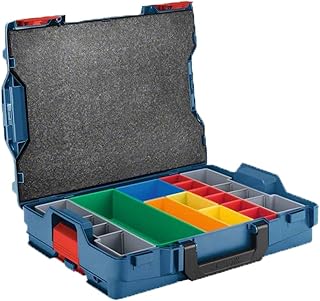


Choosing a Bosch tool case is less about finding the largest box and more about matching the storage system to the tools, accessories and working environment you actually use. Bosch Professional's current storage range includes compact L-BOXX formats, larger cases, small-parts storage, transport equipment and the newer L-BOXX Contractor system. That means two cases with the same basic purpose can be very different in practicality once capacity, portability, compatibility and organisation are taken into account.
For occasional DIY use, a compact case may be preferable because it is easier to carry and takes less space in a cupboard or garage. A tradesperson moving cordless tools between a workshop, van and jobsite may benefit much more from an interconnected modular system. The right choice therefore depends on the complete storage setup rather than the case alone.
Before comparing individual Bosch cases, make a simple inventory of the equipment that needs a permanent home. Include the bare tools, batteries, chargers, blades, drill bits, sanding accessories, measuring equipment and any other consumables that you regularly carry.
One of the easiest mistakes when buying a tool case is comparing only the published outside dimensions. The space occupied by walls, handles, latches and internal fittings means the usable volume is smaller than the external measurements suggest.
Pay particular attention to the height available above the tool. A case can appear large enough on paper yet be unsuitable if the tool's handle, battery or accessory protrudes above the usable storage area. Where a manufacturer supplies a tool-specific inlay, check that the inlay corresponds with the exact tool model rather than assuming that all Bosch tools of a similar size will fit.
The standard Bosch Professional L-BOXX family is particularly relevant when the aim is to create a modular storage system. Current UK Bosch Professional listings include the L-BOXX 102, L-BOXX 136, L-BOXX 238 and L-BOXX 374, alongside LT-BOXX and XL-Boxx options.
The L-BOXX 102 is one of the more compact standard L-BOXX formats. Bosch specifies an in-box load capacity of up to 25 kg, a top-load capacity of up to 100 kg and tensile strength of 50 kg. It also uses the Bosch L-BOXX connection system and is designed for compatibility with the Sortimo in-vehicle system.
This format is worth considering when portability is more important than maximum capacity. A smaller case can also make sense when a tool has its own dedicated inlay and there is little benefit in carrying unused space.
The L-BOXX 136 sits between compact and larger storage formats and is a useful option for buyers who want additional room without moving immediately to a very large case. Bosch states that it has an in-box load capacity of up to 25 kg, a top-load capacity of up to 100 kg and tensile strength of 50 kg. The case has a front handle and is compatible with other L-BOXX variants, tool inlays and the Sortimo in-vehicle system.
For many users, this middle-sized format can be a sensible starting point because it offers more flexibility than a very small case while remaining relatively straightforward to carry. However, capacity should still be judged against the complete kit rather than the case's external appearance.
The L-BOXX 238 is a larger standard L-BOXX format intended for buyers who need more storage space. Bosch describes it as compatible with the wider L-BOXX family, tool inlays and the Sortimo in-vehicle system, with a top handle for carrying.
The additional capacity can be useful when a tool requires a charger, several batteries and a substantial accessory selection. The trade-off is that a larger case can become considerably heavier once fully loaded, so storage volume should not be confused with practical portability.
The L-BOXX 374 is another standard Bosch Professional storage format and is listed within the current UK Bosch Mobility System range.
It is most relevant to buyers who need substantially more room within the conventional L-BOXX ecosystem. Before choosing a case of this size, consider whether separating equipment across two connected cases would provide better organisation and easier carrying than putting everything into one large container.
Bosch also lists LT-BOXX 170 and LT-BOXX 272 models within its UK Mobility System. These should not automatically be treated as interchangeable with every standard L-BOXX configuration simply because the names are similar. Check the manufacturer's compatibility information for the particular combination of boxes, inlays and transport equipment being considered.
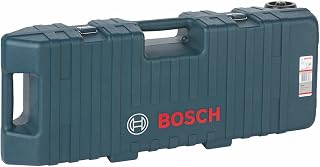
The XL-Boxx is intended for situations where conventional L-BOXX formats do not provide enough usable space. It is listed separately within Bosch Professional's basic storage range.
Large-format storage can be valuable for bulky tools and equipment, but there is an important practical distinction between having enough space and having an efficient system. A large empty area can encourage mixed storage, making it harder to locate small accessories. If organisation is the priority, several modular cases can sometimes be preferable to one oversized container.
Bosch Professional's L-BOXX Contractor range expands the concept beyond conventional carrying cases. The current system includes cases such as the Contractor 170, Contractor 322 and Contractor 476, together with a crate, drawer configuration, rack, backpack and other modular components. Bosch states that the Contractor system is compatible with standard L-BOXXes and uses integrated aluminium side rails for Bosch ProClick accessories.
The Contractor 170 is designed as a rugged, stackable storage case. Bosch specifies an impact-resistant body, IP65 rating, metal-reinforced corners, a front handle and compatibility with L-BOXXes, other Contractor cases and the ProClick portfolio.
This makes it particularly relevant to professional users who need a storage system designed around repeated transport and jobsite use rather than occasional household storage.
The Contractor 322 adds more storage volume while retaining the modular Contractor concept. Bosch specifies an IP65-rated impact-resistant body, metal-reinforced corners, two side handles, a front handle and compatibility with the wider L-BOXX and ProClick ecosystems. Bosch also specifies a top-load capacity of 100 kg and an in-box capacity of 25 kg for this model.
The Contractor 476 is designed around larger-capacity transport and incorporates large wheels for moving equipment across different surfaces. Bosch also identifies its metal-reinforced corners, impact-resistant construction, side handles and compatibility with L-BOXX and ProClick products.
A wheeled format is worth considering if a fully loaded case would be uncomfortable to carry over longer distances. It is not automatically the best option for every user, however. Wheels add bulk and are most useful when the route from vehicle to working area actually benefits from rolling transport.
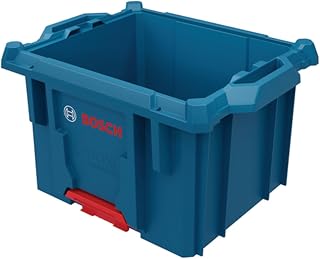
The Contractor Crate takes a different approach by omitting a lid to provide rapid access to frequently used equipment. Bosch specifies a 25 kg total weight capacity, two side handles, an impact-resistant body and compatibility with standard L-BOXXes and the wider Contractor system.
An open crate can be extremely convenient for items that are constantly being reached for, but it provides a different level of protection from a closed case. It is therefore better regarded as one component of a modular storage system rather than a universal replacement for a protective tool case.
The Contractor Drawer 3 is aimed at organisation rather than simple bulk storage. Bosch describes a configuration with one low drawer and two high drawers, while its published technical information specifies a 50 kg total weight capacity, three drawers, padlock compatibility, metal-reinforced edges and a weight of 9.7 kg.
Drawer storage can be particularly useful for hand tools, fixings and smaller equipment that would otherwise become buried underneath heavier power tools. The additional empty-case weight is an important consideration, though, particularly if the system will frequently be carried rather than rolled.
For a modular storage system, the locking mechanism is more important than it may initially appear. Bosch's current L-BOXX models use an improved click mechanism designed to make stacked boxes easier to open and handle.
If you intend to build a stack, consider how often you will need to access the lower boxes. A system that works well when boxes are stacked but still allows convenient access can be substantially more practical than a collection of unrelated cases.
A tool inlay is valuable because it holds the equipment in a defined position and can make a case far more organised than an empty box. Bosch's Mobility System includes tool inlays alongside cases and small-item storage.
Check the exact tool model and the manufacturer's compatibility information before buying. The case itself may fit a tool physically while a particular inlay does not, or an inlay may be designed around a kit configuration that differs from the one you own.
Load capacity should be assessed at two levels: the weight placed inside the case and the weight the case can support when other boxes are stacked above it. Bosch's published specifications for standard L-BOXX models distinguish between in-box capacity and top-load capacity.
Do not assume that a high top-load figure means the case should routinely be filled to that limit. The practical carrying weight will depend on the contents, the user's lifting ability and how frequently the case needs to be moved.
Handle design becomes increasingly important as cases become larger and heavier. A front handle can allow a compact box to be carried close to the body, while larger Contractor cases can use side handles and dedicated transport features.
Think about how you actually move the case. Carrying a box from a van to a nearby workbench is different from repeatedly transporting it through a large construction site. A wheeled solution may be advantageous in the second situation, while a compact hand-carry case may be preferable in the first.
Protection ratings should never be treated as marketing shorthand for being indestructible. If a case carries an IP rating, check the manufacturer's stated rating and understand what it covers. For example, Bosch identifies the L-BOXX Contractor 170 and 322 as IP65-rated.
Also consider the contents. A water-resistant case can reduce exposure to environmental conditions, but it does not mean that every tool, battery, accessory or electrical component should be deliberately exposed to water.
Closures need to be easy enough to operate regularly while remaining secure during transport. Bosch highlights securely closing latches as part of the design of its standard L-BOXX range.
When comparing alternatives from brands such as DeWalt, Makita, Milwaukee, Festool or Stanley, do not compare latch appearance alone. Consider whether the case forms part of a larger ecosystem, how replacement or additional modules are handled, and whether your existing tools are already invested in another storage platform.
Most professional tool cases rely on tough polymer construction because a case needs to balance impact resistance, weight, manufacturability and corrosion resistance. Bosch's Contractor Crate and Contractor Drawer 3 specifications identify PP as the material, with the latter also incorporating metal-reinforced edges.
A quality polymer case is usually the most practical choice for cordless power tools because it can provide substantial protection without the corrosion concerns associated with untreated metal. The important variables are not simply the name of the plastic but the overall construction, wall design, hinges, latches, reinforcement and how the case is intended to be used.
Metal-reinforced edges can be valuable in environments where corners and edges receive repeated impacts. Bosch specifically incorporates metal-reinforced corners into several L-BOXX Contractor models.
That does not make every reinforced case automatically better for every buyer. Reinforcement can add weight and cost, so it is most worthwhile when the storage system will experience demanding transport conditions.
Buyers should not automatically choose a Bosch case simply because the power tools inside the case carry the Bosch name. Storage ecosystems can become long-term purchases, particularly for tradespeople who gradually add boxes, inlays and transport equipment.
DeWalt's storage ecosystem is a major alternative for professional users, particularly those already invested in DeWalt tools and modular storage. The sensible comparison is not which brand name is better but whether the case dimensions, stacking arrangement, accessory compatibility and transport method suit the equipment already owned.
Makita also offers tool cases and storage solutions designed around its own cordless and professional tool ranges. If most of your equipment is already Makita, staying within one compatible ecosystem can reduce duplication and make tool-specific storage easier to manage.
Milwaukee's modular storage approach is another relevant competitor for professional users. Compare the complete system rather than one case at a time, especially if you need organisers, drawers, wheeled transport or additional modules in the future.
Festool is particularly relevant to buyers who prioritise an integrated professional tool-and-storage ecosystem. The comparison should focus on the tools you already own, the accessories you need to carry and whether interoperability between storage components is more valuable than the lowest initial purchase cost.
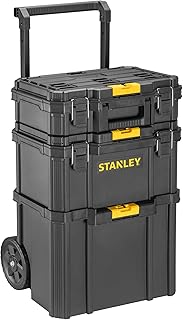
Stanley covers a broad range of tool storage, including options aimed at general-purpose users. For a DIY user, a straightforward toolbox may offer better value than a sophisticated modular professional system. For a tradesperson who transports multiple compatible power tools every day, the additional modularity of a professional system may justify a different buying decision.
One large case appears attractive because it promises to hold everything in one place. In practice, it can become inconvenient when heavy tools are mixed with small accessories. Modular storage solves this by dividing equipment into logical groups.
Bosch's current Mobility System is built around this broader concept, combining cases with small-item storage, transport devices, inlays and Contractor components.
More capacity is not automatically better. A large case takes more room in a vehicle, can become heavy when full and may encourage poorly organised storage. Choose the smallest format that comfortably accommodates the equipment you actually need.
Professional storage can be robust, but robustness has a weight cost. The Contractor Drawer 3, for example, has a specified empty weight of 9.7 kg before tools and accessories are added.
If you regularly carry cases by hand, empty weight deserves almost as much attention as capacity.
A tool may fit perfectly in an inlay while the complete kit does not. Batteries, chargers and accessory cases can occupy more space than expected. Always assess the complete package you intend to transport.
L-BOXX, LT-BOXX, XL-Boxx and Contractor products are different parts of a broader storage ecosystem. Compatibility should be checked at the individual product level rather than inferred solely from the Bosch branding.
Wheels, drawers, high protection ratings and extensive modularity can all be useful, but they can also add cost, weight and bulk. A DIY user who carries a case from a garage to a garden may have very different priorities from an electrician moving equipment around several floors of a commercial building.
The lowest-priced case is not necessarily the lowest-cost storage solution over time. If a case is incompatible with the inlays, organisers or transport equipment you later need, replacing it can be more expensive than choosing the right ecosystem initially.
DIY buyers should prioritise straightforward storage, sensible capacity and easy carrying. There is rarely a need to build a large professional storage stack unless the equipment collection genuinely warrants it.
A compact L-BOXX can be attractive when the objective is to keep a cordless drill, accessories and batteries together. If the tool collection grows, additional compatible storage can then be considered rather than purchasing a very large case from the outset.
Electricians often need a mixture of power tools, hand tools, test equipment, fixings and small accessories. Organisation can therefore be more important than raw volume. Consider separating frequently used hand tools and small components from heavier cordless equipment.
Carpenters and joiners may need to carry drills, impact drivers, sanders, saw-related equipment and numerous consumables. The best storage arrangement depends heavily on the specific tool collection, but a modular system can make it easier to take only the equipment required for a particular job.
General tradespeople can benefit from storage that is easy to stack, transport and reconfigure. The Contractor range becomes particularly relevant where equipment is exposed to demanding site conditions and where a wheeled or modular configuration can reduce unnecessary carrying.
If the case will spend most of its life in a workshop, portability may matter less than accessibility and organisation. Drawer-style storage or small-parts organisers can be more useful than a traditional closed case for equipment that is accessed throughout the day.
A modular system does not need to be purchased all at once. Start with the storage format that matches your most important tool, then add components as the equipment collection develops.
Bosch currently describes its Mobility System as encompassing 47 products across categories including basic L-BOXX elements, small-item storage, transport devices, inlays, tool bags and L-BOXX Contractor components.
When comparing two apparently similar cases, use the specification sheet rather than relying on product photography. The most useful fields include:
Specifications can change between product variants, so check the exact model number rather than relying on the name alone. Bosch product pages provide order numbers and technical information for individual L-BOXX and Contractor products, making it easier to distinguish similarly named cases.
Regularly remove broken drill bits, damaged accessories, packaging and unused components. An overfilled case can become difficult to close and can also make it harder to identify missing equipment.
Fine dust can accumulate around latches, hinges and connection points. Periodic cleaning helps maintain smooth operation. Use a cleaning method appropriate to the manufacturer's instructions and avoid deliberately forcing water into mechanical or electrical components.
Check for cracks, distortion or unusual movement. A damaged latch should not be treated as a minor cosmetic issue if it affects the case's ability to close securely.
A case that closes successfully can still be overloaded. Published load capacities are there to define the intended limits of the product. This is especially important when multiple boxes are stacked, because the lower case can be carrying the weight of the cases above it as well as its own contents.
A rugged case cannot compensate for poorly stored tools. Keep sharp accessories restrained, prevent loose batteries from moving around unnecessarily and use suitable organisers where small parts could otherwise become projectiles during transport.
The Bosch Mobility System is broader than the conventional idea of a tool case. Bosch currently groups its UK products into L-BOXX basic elements, small-items storage, transport devices, L-BOXX inlays, tool bags and L-BOXX Contractor products.
This distinction matters because the best buying decision may involve several components rather than one case. For example, a professional could combine a tool-specific L-BOXX with small-parts storage and a transport solution instead of putting every item into one container.
There is no single Bosch case that is best for every buyer. The appropriate choice depends on tool size, storage capacity, portability, protection requirements and whether the case needs to integrate with a wider modular system. The L-BOXX 102, 136, 238 and 374 cover different storage requirements, while the Contractor range adds more jobsite-focused configurations.
The L-BOXX 136 is a useful middle-ground format for buyers who need more space than a compact case but do not require one of the largest options. Bosch specifies a 25 kg in-box capacity and compatibility with other L-BOXX variants, tool inlays and the Sortimo in-vehicle system.
The Contractor range extends the modular storage concept with features aimed at demanding jobsite use, including impact-resistant construction, metal-reinforced corners on applicable models, integrated rails for ProClick accessories and configurations such as wheeled cases, crates and drawers. Contractor products are also designed to remain compatible with standard L-BOXXes.
Yes. Stackability is a central part of the L-BOXX system, with Bosch describing an improved click mechanism that allows stacked boxes to be opened more conveniently. Always check the specific model and compatibility information when combining different storage products.
Selected Bosch L-BOXX products are designed for compatibility with the Sortimo in-vehicle system. Bosch explicitly identifies this compatibility for standard models such as the L-BOXX 102 and 136.
A case may physically accommodate tools from other manufacturers, but physical fit does not guarantee compatibility with a particular inlay or storage configuration. If you are storing DeWalt, Makita, Milwaukee, Festool or another brand's tools in a Bosch case, measure the equipment carefully and check the internal dimensions and accessory requirements.
Some Contractor models carry an IP65 rating, including the Contractor 170 and Contractor 322. That should be distinguished from a general statement that every Bosch tool case is waterproof. Check the precise protection rating of the model being considered and follow the manufacturer's instructions for use.
Several smaller connected cases are often preferable when different groups of tools are used for different jobs. One large case can make sense when the equipment is normally transported together, but its total weight and internal organisation should be considered before buying.
They can be, particularly when the same tool is transported frequently. A properly matched inlay can improve organisation and reduce movement inside the case. Bosch includes tool inlays as part of its broader Mobility System, so they are an important consideration when planning a complete storage setup.
Prioritise external dimensions, stacking compatibility, secure closure, load capacity and compatibility with the vehicle storage system. Bosch identifies Sortimo compatibility for several L-BOXX products, which can be relevant when building a professional in-vehicle storage arrangement.
Not necessarily. If you own one or two tools and use them occasionally, a straightforward case may be all that is required. The value of a modular professional system becomes more apparent as the number of compatible tools, batteries, accessories and transport requirements increases.
Before choosing a Bosch tool case, compare the following rather than relying on product photographs or headline capacity alone:
The strongest Bosch tool-case choice in 2026 is not necessarily the newest, largest or most expensive model. A better approach is to select the storage format that fits the equipment you already own and then consider whether you are likely to expand the system.
For compact tool kits, a standard L-BOXX can provide a sensible combination of protection, organisation and modularity. For larger professional collections, the wider Bosch Mobility System allows cases, inlays, small-item storage and transport components to be combined into a more structured setup. For demanding jobsite use, the L-BOXX Contractor range deserves particular attention because it introduces ruggedised cases, wheeled transport, open crates, drawers and ProClick integration into the same broader storage concept.
The most important buying principle is simple: choose for the complete workflow, not just the box. Think about what you carry, how far you carry it, how often you access it, where it is stored and what you may add later. Check the current technical specification for the exact model, compare today's prices from trusted retailers, read verified customer feedback where available, and confirm compatibility before purchasing.