

♥ Wishlist
Compare 14 verified Tool Cases and Bags products in United Kingdom. Reviews, ratings, pros, cons and buying advice updated for October 2026.


The best tool case or tool bag is not necessarily the largest, toughest-looking or most expensive option. The right choice depends on what you carry, how often you transport it, where you work and how quickly you need to access individual tools. A compact electrician's bag can be more useful than a large general-purpose case for day-to-day service work, while a rigid organiser may be preferable for protecting precision tools, fittings and small components.
For UK buyers, it is also worth considering the difference between a bag designed for carrying tools and a storage system designed to organise an entire workshop or site setup. Soft-sided bags generally provide easier access and can be lighter to carry. Rigid cases normally provide greater protection from impacts and crushing. Modular systems sit between the two, allowing boxes, organisers, cases and bags to be combined as your tool collection grows.
Before choosing from the products in this guide, consider the tools you already own rather than buying around an imagined future collection. Measure bulky equipment, check the dimensions of the compartments and think about the total weight once the bag is fully loaded. A bag that looks spacious when empty can become awkward to carry when filled with hand tools, batteries, chargers and accessories.
Tool bags and tool cases solve the same broad problem but approach it differently. A tool bag normally prioritises accessibility, portability and flexible storage. A tool case tends to prioritise protection, organisation and resistance to external knocks. Neither format is universally superior.
A hybrid approach can be particularly practical for professionals. A rigid organiser can hold sockets, drill bits, fixings and other small components, while a soft tool bag carries the hand tools required for immediate access. This avoids the common problem of using one oversized container for everything.
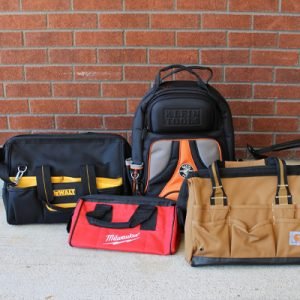
Brands such as DeWalt, Milwaukee, Makita and Bosch Professional offer different approaches to tool storage, while Stanley FatMax, Bahco, Klein Tools, FACOM and Veto Pro Pac are also names worth considering when comparing professional-oriented storage. The important point is not to choose a brand simply because it is familiar; compare the actual construction, capacity, dimensions, compatibility and carrying system of the specific product.
Construction quality is one of the most important long-term considerations. Soft tool bags are commonly made from synthetic woven fabrics, with heavier-duty versions using reinforced panels, stitching and protective elements around high-wear areas. Rigid cases may use moulded plastics or other hard-shell materials, with hinges, latches and handles becoming important points of comparison.
A heavy fabric specification alone does not guarantee a better tool bag. Examine how the base, handles, shoulder strap attachment points, pocket seams and closure systems are constructed. These areas can experience considerably more stress than the main body of the bag.
The base is frequently overlooked during a buying decision. A reinforced or rigid base can help protect tools when the bag is placed on a wet, dirty or rough surface. It can also help the bag retain its shape and reduce wear caused by repeatedly setting it down.
For professionals who work outdoors or move between vehicles and building sites, base construction can be more important than having a very large number of pockets. A beautifully organised bag that absorbs water through a vulnerable base may be less practical than a simpler design with better protection underneath.
Carrying comfort becomes increasingly important as the weight of the tool load increases. Look for handles that distribute weight comfortably and are securely attached to the body of the bag. If a shoulder strap is supplied, check whether it is adjustable and whether its attachment points appear appropriate for the intended load.
Do not judge carrying comfort from an empty bag alone. A tool bag can feel light in a showroom or when first unpacked but become considerably less comfortable after being filled with metal hand tools, power-tool batteries and accessories.
Closures are another high-wear area. A zip should open smoothly without requiring excessive force, while rigid cases rely heavily on the quality and design of their latches and hinges. A closure that is difficult to operate with one hand can become frustrating when the bag is used repeatedly throughout a working day.
There is also a practical distinction between fully enclosed storage and open-top access. Fully enclosed bags can help contain the contents during transport, whereas open-top designs prioritise speed when tools are being used repeatedly.
More pockets do not automatically mean better organisation. Excessive subdivision can make it difficult to store larger tools, while a bag with too few compartments can turn into a collection of loose equipment.
Think about the actual shape of your tool collection. Screwdrivers, pliers, cutters and measuring tools may benefit from narrow vertical pockets. Power tools and larger hand tools generally need open internal space. Small fixings and accessories are better suited to zipped pockets, removable organisers or dedicated compartments.
Advertised capacity can be useful for comparing products, but volume figures do not tell the whole story. Two bags with similar stated capacity can feel completely different in use because one may have a large uninterrupted central compartment while the other allocates much of its volume to pockets and dividers.
Internal dimensions are therefore more informative when you already know which tools need to fit inside. Pay particular attention to the height and width of the main compartment if you carry drills, drivers, larger pliers, hammers or other bulky equipment.
Also consider access rather than simple capacity. A deep compartment may technically hold more tools but require you to remove several items before reaching the tool underneath. For frequently used equipment, accessibility can be more valuable than maximum storage volume.
The empty weight of a tool bag or case is easy to overlook because the contents normally account for most of the final load. However, a heavy storage system adds weight before any tools are placed inside it.
For occasional DIY use, this may make little difference. For tradespeople carrying equipment repeatedly between a vehicle, workshop and job site, the cumulative effect can be significant. A slightly lighter bag with sensible organisation may be preferable to a heavier premium case that offers features you rarely use.
Ergonomics also includes the position of the handles, the width of the shoulder strap, the balance of the loaded bag and the ease with which tools can be removed. If the contents consistently pull the bag to one side, even a well-built product can become inconvenient.
A tool bag described as water resistant should not automatically be treated as waterproof. Protection from splashes or light rain is different from protection against prolonged exposure to heavy rain or standing water.
If you regularly work outdoors, examine the construction of the base, seams, zips and openings. Water can enter through a zip or open top even when the main fabric itself is relatively resistant to moisture.
For indoor workshop use, moisture resistance may be a secondary consideration. For construction, maintenance and mobile service work, it can become a much more important part of the buying decision.
The most effective tool storage systems reduce the amount of time spent looking for equipment. Organisation should therefore follow workflow rather than aesthetics.
Put the tools you use repeatedly in the easiest-to-reach compartments. A screwdriver or pair of pliers that is needed throughout the day should not be buried underneath rarely used equipment simply because the deeper compartment appears tidier.
Cutters, blades and other sharp tools should be positioned so that they cannot damage the bag or other equipment. Delicate measuring instruments and electronic devices may also benefit from dedicated protection rather than being stored loose with heavy metal tools.
Drill bits, driver bits, sockets, fixings, cable accessories and similar small items can quickly turn an otherwise organised bag into a cluttered one. Dedicated organisers or removable boxes can make these components easier to identify and reduce unnecessary searching.
A tool bag does not need to be filled to its maximum capacity. Leaving some free space makes tools easier to remove and can prevent excessive strain on zips, seams and handles. It also leaves room for a small number of job-specific items without requiring a second bag.
Modular storage is increasingly relevant to buyers who want one system that can grow with their tool collection. The basic idea is that separate boxes, organisers, cases, bags or storage units can be combined into a larger system.
Before committing to a modular platform, check whether the components you actually need are compatible. Do not assume that products from different manufacturers will connect simply because they appear similar in size.
Fabric bags offer flexibility and generally provide a good balance between weight, accessibility and storage capacity. They are particularly useful when the contents change regularly because the flexible walls can accommodate tools with different shapes.
Heavier woven fabrics are often selected for professional tool bags because they can provide greater resistance to abrasion than lighter fabrics. However, the fabric should be considered alongside stitching, reinforcement and the design of stress points rather than in isolation.
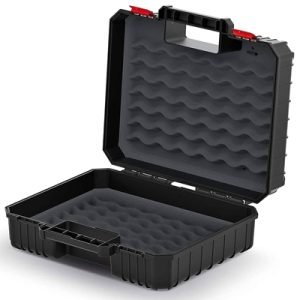
Moulded cases provide a different set of advantages. Their rigid structure can protect contents from external pressure and makes them easier to stack. The trade-off can be additional weight and less flexibility when storing unusually shaped tools.
Some professional storage products incorporate metal reinforcement or hardware around high-stress areas. This can improve structural rigidity, although additional reinforcement can also increase weight. Compare where the reinforcement is located rather than assuming that more metal automatically means better performance.
A large bag may seem like the safest option because it provides room for future purchases. In practice, excessive capacity can encourage unnecessary carrying and make individual tools harder to locate.
Always consider the combined weight of the storage system and its contents. This is particularly important when the bag will be carried up stairs, across large sites or between multiple locations during the working day.
A pocket count is easy to compare but difficult to use as a measure of quality. A smaller number of well-positioned compartments can be more practical than dozens of tightly packed pockets.
Battery-powered equipment can substantially change storage requirements. Batteries and chargers can be bulky and heavy, so make sure the main compartment has enough usable space if you intend to transport them alongside hand tools.
Product photographs can make tool bags appear considerably larger or smaller than they are. Check the manufacturer's stated dimensions and compare them with the tools you intend to carry.
Water resistance varies considerably between designs. Look for specific manufacturer information about weather resistance rather than treating a rigid exterior or thick fabric as proof of waterproof construction.
Modular systems can become expensive if you later discover that the case, organiser or trolley you need is incompatible with your existing equipment. Check the system structure before expanding it.
Budget tool bags can be perfectly adequate for occasional household maintenance. If a bag is used only a few times each year, paying for professional-grade features may not provide meaningful value.
Frequent users should evaluate durability, carrying comfort, organisation and access more carefully. The cost of a storage system is only one part of its value. A product that is easier to organise and carry can save time and reduce frustration over a long period of use.
Professional buyers should also consider whether the product complements an existing tool-storage ecosystem. A slightly more expensive case may be worthwhile if it integrates with storage already used in a workshop or vehicle, provided the compatibility is confirmed by the manufacturer.
Brand reputation can be a useful starting point, but it should not replace product-level comparison. Established names have different strengths, product ranges and storage philosophies.
The best brand for one buyer may not be the best for another. A homeowner carrying a small collection of hand tools has different priorities from a mobile professional carrying power tools, batteries, testers and accessories every day.
When two products appear similar, compare them using the same criteria rather than relying on appearance or brand recognition.
Rigid cases require a slightly different assessment. Protection and portability become particularly important, especially where cases are used for expensive tools, measuring equipment or equipment that must remain protected during transport.
DIY users rarely need to replicate a professional tradesperson's entire storage system. A compact bag or case with sensible organisation can be more useful for household repairs, furniture assembly, decorating and basic maintenance.
Prioritise versatility over specialist features. A good general-purpose setup should accommodate common hand tools while leaving enough space for occasional additions. If you already use a cordless drill or driver, allow room for batteries, bits and the charger if these are routinely transported.
Professional users should think of a tool bag as part of their working system rather than simply a container. Access, weight distribution, durability and workflow can have a direct effect on how convenient the equipment is to use throughout the day.
It can make sense to use several smaller storage units rather than one huge bag. For example, one unit can contain everyday hand tools, another can hold specialist equipment and a rigid organiser can handle small consumables. This approach also means you do not have to carry every tool to every job.
Vehicle storage introduces additional considerations. Measure the available space before choosing large cases or modular systems, particularly if the storage must fit beneath shelving, inside a van racking system or in a car boot.
Stackability can be valuable, but only if the resulting stack remains practical to move. A modular system that is excellent when stationary may become cumbersome when several fully loaded units have to be carried at once.
Consider separating frequently used equipment from reserve tools. Keeping the everyday kit in a smaller portable bag can reduce unnecessary lifting and make it quicker to leave the vehicle with only the equipment required for a particular job.
Good maintenance can extend the useful life of tool storage and helps identify problems before they become failures.
Replacement should not be based solely on age. A well-maintained storage product may remain useful for years, while heavy daily use can accelerate wear considerably.
Look for structural problems that affect safe and practical carrying. Damaged handles, failing strap attachments, broken latches, badly compromised seams, cracked rigid shells and closures that no longer secure the contents are all reasons to reassess whether continued use is sensible.
It is also reasonable to replace a product when your tool collection has changed significantly. A bag that worked well for a small hand-tool kit may become inefficient after adding several cordless tools and batteries, even if the original bag remains structurally sound.
Value is not simply the lowest purchase price. Consider how often the product will be used, how much equipment it needs to carry and whether it is likely to remain suitable as your needs develop.
For occasional DIY, spending less on a straightforward bag can be sensible. For daily professional use, durability and ergonomics can justify comparing more premium products. The key is matching the specification to the workload rather than automatically choosing either the cheapest or most expensive option.
Before buying, compare specifications from the manufacturer and trusted retailers, read verified customer feedback and check today's prices because availability and pricing can change. Where possible, compare the cost of the complete storage setup rather than judging an individual case in isolation.
There is no single best tool bag for every buyer. The most appropriate option depends on the working environment and the type of equipment being carried.
The best general-purpose tool bag is one that comfortably holds the tools you actually use without becoming unnecessarily large or heavy. Look for a practical mixture of open storage and smaller compartments, a durable base and comfortable carrying handles.
Neither is universally better. Tool bags tend to offer flexible storage and quick access, while rigid boxes and cases can provide greater protection and stackability. The better choice depends on whether portability, accessibility or protection is your main priority.
They can be worthwhile for people who use their storage system frequently and benefit from stronger construction, better organisation or improved carrying comfort. Occasional DIY users may find that a simpler product provides better overall value.
Choose a size based on the tools you need to carry rather than the maximum capacity advertised. Measure bulky equipment and allow some spare space so the bag remains easy to organise and does not need to be overloaded.
It depends on the working environment. Indoor users may have little need for high levels of weather protection, whereas outdoor tradespeople may place greater importance on water resistance and a protected base. Always distinguish between water resistant and genuinely waterproof construction.
Modular systems can be useful when your equipment is likely to grow or when you want separate storage for different categories of tools. They are most valuable when the system's components match your actual workflow and are compatible with equipment you already own.
Assign specific locations to frequently used tools, keep small accessories in dedicated organisers and avoid filling every available space. Periodically remove tools that are rarely used and only carry them when they are needed for a particular job.
Focus on construction quality, handle and strap attachment, base protection, compartment layout, access, carrying comfort and suitability for your typical load. Professional users should also consider how the bag integrates with vehicle storage and other equipment.
Protection varies significantly by design. Fabric type, seams, zips, openings and base construction all influence moisture resistance. Check the manufacturer's stated protection level instead of assuming that a heavy-duty fabric bag is waterproof.
Brands such as DeWalt, Milwaukee, Makita, Bosch Professional, Stanley FatMax, Bahco, Klein Tools, FACOM and Veto Pro Pac are all worth comparing, depending on the type of storage required. The specific product specification remains more important than the logo on the bag.
Only if the pocket arrangement matches your tools. Too many small compartments can reduce useful space for larger equipment, so prioritise the layout and accessibility rather than the raw number of pockets.
There is no universal schedule. Clean it whenever dust, dirt or debris begins to interfere with organisation or the operation of zips and closures. Heavy-use bags may benefit from more frequent inspection and cleaning than bags used occasionally around the home.
Neither should be considered in isolation. The right balance depends on the workload. A professional who carries heavy tools every day may benefit from durability and reinforced carrying points, while an occasional user may gain more from a lightweight and compact design.
The strongest buying decision starts with the tools, not the storage product. Make a realistic list of what you need to carry, identify the largest and heaviest items, then decide how much organisation and protection your work requires.
Compare tool bags and cases on construction, dimensions, capacity, weight, access, compartments, carrying comfort, weather resistance and compatibility rather than relying on a single headline feature. Established brands such as DeWalt, Milwaukee, Makita, Bosch Professional and Stanley FatMax can provide useful starting points, but the best option is ultimately the product whose specification fits your particular workload.
For occasional household use, simplicity is often an advantage. For demanding professional work, durability, ergonomics and workflow become increasingly important. If your tool collection is expanding, a compatible modular storage system may offer greater flexibility than repeatedly replacing individual bags.
Before making a purchase, compare current specifications, check verified customer reviews, confirm dimensions and compatibility, and compare today's prices from trusted retailers. Taking those steps is more useful than choosing solely on appearance, brand familiarity or the number of pockets advertised.