

♥ Wishlist


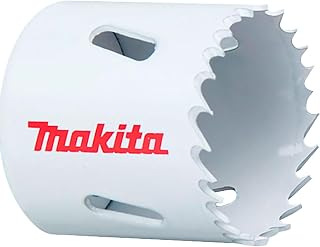
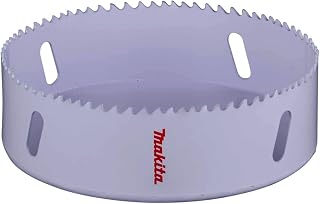


When you need to make a clean circular opening, a Makita hole saw can be a practical addition to your drilling equipment. Hole saws are designed to remove a circular section of material rather than creating a hole using a conventional drill bit alone. This makes them particularly useful for installation work where larger openings are required for cables, pipes, sockets, fittings and other components. Makita hole saws are suitable for a variety of workshop, maintenance, construction and DIY tasks, provided the selected saw is appropriate for the material and application.
Choosing the correct hole saw starts with the diameter of the opening you need to produce. Hole saws are available in different sizes, allowing you to match the cutting diameter to the fitting or component being installed. Measuring the required opening before purchasing helps avoid choosing a saw that is too small or unnecessarily large. It is also worth checking the specifications of your drill and any arbor or pilot arrangement required, as compatibility is important for safe and effective use.
The material you are cutting is another important consideration. Different hole saw designs are intended for different materials and cutting conditions. Depending on the particular product, applications may include wood, plastics, sheet materials and certain metals. Always check the manufacturer's specifications for the individual saw before use, particularly when working with harder or specialist materials.
For woodworking and general installation jobs, a suitable hole saw can quickly produce openings for cable routing, plumbing and fixtures. When working with metal, selecting a hole saw designed for the material and using the recommended operating conditions can help produce a more controlled cut. Matching the cutting accessory to the job is therefore more important than simply selecting a hole saw based on diameter alone.
Size is one of the first specifications UK shoppers should check when comparing hole saws. The required diameter will normally depend on the component being fitted and the clearance needed for the installation. If you regularly work with several different opening sizes, a selection of hole saws can provide greater flexibility than purchasing individual sizes as each job arises.
Before cutting, confirm that the hole saw is designed for the material in question. Wood, plastics and metals can require different cutting characteristics, tooth designs and operating techniques. Using an accessory outside its intended application can affect cutting performance and may damage the accessory or workpiece. Product specifications should always take priority when determining suitability.
A reliable hole saw can save time during installation and maintenance work by producing a larger opening without needing to drill a series of overlapping holes. Electricians, plumbers, joiners, installers, maintenance professionals and experienced DIY users may all find hole saws useful for suitable applications. They can be particularly convenient when multiple identical openings are required during a project.
For professional users, selecting accessories that suit the tools already in the workshop can help keep preparation straightforward. Check the connection and arbor requirements as well as the saw diameter. If a pilot drill or arbor is required, ensure that the complete setup is compatible before starting work. This is especially important when replacing an existing hole saw with a different model or size.
Good preparation can make a noticeable difference to hole quality. Mark the centre of the opening carefully and secure the workpiece wherever possible. Start the cut in a controlled manner, keeping the drill aligned with the intended hole. Allow the accessory to perform the cutting rather than applying excessive pressure. The appropriate speed and technique will depend on the material, tool and specific hole saw, so follow the manufacturer's instructions for the product you are using.
When creating deeper openings, clearing debris can help maintain cutting performance. Avoid forcing the saw if it begins to bind, and stop if the setup becomes unstable. Appropriate eye protection and other suitable personal protective equipment should also be used in accordance with the tool and accessory instructions.
Makita is widely recognised for producing power tools and accessories for professional and general-purpose applications. Selecting a Makita accessory can be a convenient choice for users who already work with compatible Makita equipment. However, compatibility should always be confirmed for the specific saw, arbor and drill combination rather than assumed from the brand name alone.
Whether you are completing a one-off installation or maintaining a regularly used workshop, choosing the correct hole saw can improve convenience and help you achieve the required opening efficiently. Consider the cutting material, hole diameter, tool compatibility and expected workload before making your selection.
Explore the available Makita hole saw range to find an accessory suited to your next cutting task. Compare sizes and specifications carefully, then select the option that matches your material and equipment. With the right hole saw, creating neat circular openings can become a simpler part of installation, maintenance, woodworking and general workshop work.
Find the right Makita hole saw for accurate, efficient hole cutting across a range of DIY, trade and professional applications. Whether you need to create openings for pipes, cables, fittings or other installations, choosing a suitable hole saw can make cutting cleaner, faster and easier. Browse Makita hole saw options at Toolbit and select the size and specification that best matches your tool, material and job.