


♥ Wishlist


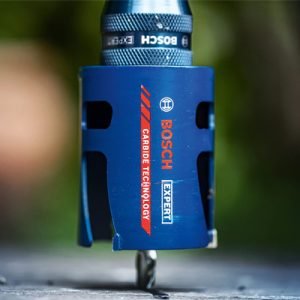
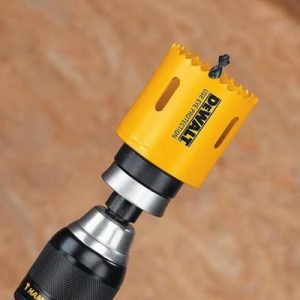
Hole saws are specialist cutting accessories designed to create round holes quickly and consistently. Unlike a conventional drill bit, a hole saw removes material around the circumference of the opening while leaving a central core. This makes hole saws particularly useful when you need a larger diameter opening than a standard drill bit can provide. They are widely used by tradespeople, installers, maintenance professionals, joiners, electricians, plumbers and DIY users across the UK.
The best hole saw depends on the material being cut, the required hole diameter and the type of job you are carrying out. Hole saws are available in a variety of sizes and cutting designs, allowing users to select an accessory suited to applications ranging from woodworking and furniture projects to metal fabrication and installation work. Checking these requirements before choosing a hole saw can help improve cutting performance and extend the working life of the accessory.
For woodworking applications, a suitable hole saw can produce openings for cables, pipes, fittings, handles and other components. When cutting timber, plywood, MDF or similar sheet materials, the tooth configuration and quality of the cutting edge can influence how cleanly the saw enters and exits the material. A sharp, appropriately designed hole saw can help reduce splintering and produce a more professional finish.
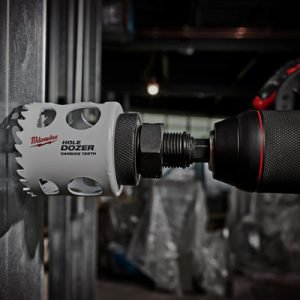
Metalworking applications require a hole saw designed for the particular material and cutting conditions. Depending on the job, this may include cutting mild steel, stainless steel, aluminium or other metals. Bi-metal hole saws are a popular choice for many general-purpose applications because they combine cutting performance with durability. For demanding specialist work, other hole saw constructions may be more appropriate. Always check the manufacturer's specifications and recommended operating conditions before cutting.
Hole saws can also be used for cutting plastics and other sheet materials. Selecting an appropriate tooth pattern and controlling the cutting speed can help prevent excessive heat build-up and material damage. The correct combination of hole saw, drill and technique is important for achieving a clean opening, particularly when working with thin or heat-sensitive materials.
When selecting a hole saw, diameter is one of the most important considerations. Measure the required opening carefully and choose a saw that matches the finished hole size needed for the installation. Hole saw sizes are commonly specified in millimetres, making it straightforward to select an accessory for a particular fitting or component. If a project involves several different hole diameters, a hole saw kit can be a practical option.
Hole saw kits typically bring multiple sizes together with compatible arbors and pilot drills, depending on the kit design. They can be useful for installers and tradespeople who regularly encounter different cutting requirements. Buying a set can also make storage and transport easier, while providing a convenient selection of commonly used diameters. For occasional or highly specific work, purchasing an individual hole saw may be the more suitable approach.
The arbor and pilot drill are also important parts of a hole saw system. The arbor connects the hole saw to a compatible drill or other suitable power tool, while the pilot drill helps centre the accessory and guide the cut. Before starting work, check that the hole saw, arbor, pilot drill and power tool are compatible. Following the manufacturer's instructions for speed, pressure and material suitability is essential for safe and effective use.
For accurate results, mark the centre of the intended opening clearly and ensure the workpiece is securely supported. Start the cut in a controlled manner, allowing the pilot drill to establish the position before applying consistent pressure. Avoid forcing the hole saw through the material, as excessive pressure can reduce cutting performance and increase heat or wear. When working with metal, appropriate cutting lubricant may be recommended depending on the material and hole saw design.
Safety should always be considered when using hole saws. Wear suitable eye protection and follow the safety guidance supplied with the cutting accessory and power tool. Secure loose workpieces before cutting, keep hands away from the rotating accessory and allow the hole saw to stop completely before removing it from the work area. Check the accessory for damage or excessive wear before use and replace components when necessary.
Whether you need one specific diameter or a versatile selection for regular installation work, the right hole saw can make larger circular cuts faster and more manageable. Consider the material, hole diameter, cutting depth, tooth design, arbor compatibility and frequency of use when comparing options. Choosing the correct accessory for the job helps support cleaner cuts, reliable performance and efficient working.