

♥ Wishlist
Compare 49 verified Air Control Handles products in United Kingdom. Reviews, ratings, pros, cons and buying advice updated for October 2026.


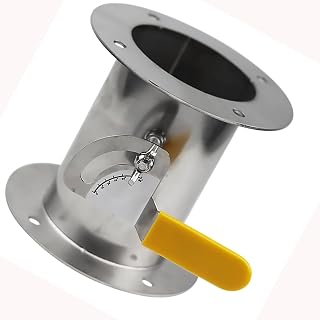


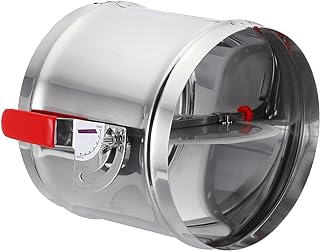


An air control handle is a small component, but it can have an important role in the everyday operation of a stove. Depending on the stove design, the control may regulate primary air, secondary air, combustion air, or a combination of air inlets. The handle may also be connected to a slider, rod, spindle, flap or internal linkage rather than directly controlling the air opening itself.
That makes compatibility more important than simply finding a handle that looks similar to the original. A replacement can appear almost identical while having a different fixing method, shaft length, thread, projection, mounting arrangement or operating range. For replacement parts, the stove model and exact part identification should therefore come before appearance, material or price.
For buyers comparing complete stoves, the same principle applies in reverse: a well-designed air control should be easy to identify, intuitive to operate and sufficiently robust for repeated use. A handle that becomes excessively hot, feels loose or has an awkward operating movement can make everyday stove control unnecessarily difficult.
The handle is the user-facing part of an air-control mechanism. Moving it changes the position of an internal component that affects the flow of combustion air into the stove. The exact arrangement varies considerably between manufacturers and stove models.
Some appliances use a single control, while others separate different air supplies. A single control may therefore have several operating positions rather than functioning like a simple on/off switch. On some stoves, moving the control through its range progressively alters combustion air; on others, particular positions are intended for lighting, normal burning or reduced output.
Never assume that the same handle position means the same thing on different stoves. The manufacturer's operating instructions should take precedence over generic advice, particularly when changing the air supply during lighting, refuelling or normal operation.
If the purpose of your purchase is to replace a damaged, missing or worn air control handle, compatibility should be treated as the first buying criterion. This is more important than selecting a visually attractive universal alternative.
Start with the name on the appliance, its documentation or its original installation paperwork. Common stove manufacturers and brands encountered in the UK market include Stovax, Jøtul, Morso, Charnwood, Mendip, Yeoman and RAIS. These names should be treated as starting points for identification rather than evidence that every handle bearing a particular brand name will fit every model.
A manufacturer may use different handles across different generations and stove ranges. Even within a single range, revisions can introduce different components. A brand match is useful, but the exact model remains essential.
Look for the model name or number on the stove itself, rating plate, installation documentation or manufacturer's parts information. Older appliances can be particularly difficult because a model may have been revised during its production life.
Where possible, record the complete model designation rather than relying on a shortened name. Terms such as Mk1, Mk2, Eco, Classic, Plus, Wide, Highline or similar suffixes can distinguish versions that use different spare parts.
If the original handle has a part number, this is usually one of the strongest identifiers available. Compare the complete number rather than matching only a few digits.
Part numbers are particularly valuable when the replacement is being sourced for an older stove. A photograph alone may not reveal differences in the rear mounting arrangement or the length of the connection to the air-control mechanism.
Examine how the existing handle attaches to the control mechanism. Depending on the design, it may use a screw, pin, threaded connection, grub screw, shaft, collar or another fixing arrangement.
The visible handle is only part of the assembly. A replacement with the correct external shape but an incompatible fixing method is unlikely to provide a satisfactory solution.
Useful measurements can include the overall handle length, width, thickness, shaft or mounting diameter, fixing-hole position and the depth of the connection. Measure the original component where practical and compare those measurements with the manufacturer's specification.
Do not assume that a difference of only a few millimetres is irrelevant. Clearance around the door, fascia or air inlet can be limited, particularly on compact stove designs.
The material of an air control handle affects appearance, durability, heat behaviour and maintenance requirements. The correct choice is not necessarily the heaviest or most expensive option; compatibility and suitability for the intended stove should come first.
Steel is widely associated with practical stove hardware because it can provide a strong, straightforward component without excessive visual ornamentation. It is often a sensible choice where durability and compatibility are more important than decorative detailing.
Finish still matters. Painted, coated, polished and untreated steel can behave differently over time, especially when exposed to heat, cleaning products or moisture. A replacement should be specified for the intended stove application rather than selected solely because it is described as steel.
Cast metal can provide a substantial feel and may suit traditional stove designs. Cast components can also reproduce the shape and styling of original manufacturer parts particularly well.
However, apparent solidity should not be confused with universal compatibility. A cast handle with the wrong fixing arrangement remains the wrong replacement.
Brass and brass-effect finishes can complement traditional stoves and fireplaces. They may be chosen primarily for appearance, particularly where the handle is prominent on the front of the appliance.
Before choosing a decorative alternative, check that it is intended for the temperature and application involved. A component designed for general furniture or interior hardware should not automatically be assumed to be suitable for a stove.
Stove controls operate in a demanding environment. The correct component needs to be designed for the temperatures and operating conditions associated with the appliance. This is another reason to favour a manufacturer-specified replacement where one is available.
A handle that becomes uncomfortable to use may indicate that the appliance requires a particular operating technique or that an appropriate heat-resistant grip or spacer is part of the original design. Do not improvise with materials that have not been designed for high-temperature applications.
A good control should provide a clear relationship between handle movement and the intended air setting. Excessive looseness, unexplained resistance or an inconsistent movement can make the control difficult to use.
When comparing products, look beyond the appearance of the handle and consider the complete operating mechanism. A handle itself cannot compensate for a damaged slider, bent rod, worn spindle or defective linkage.
The handle should be easy to operate without requiring an awkward grip. This is particularly relevant when the control is positioned close to a hot stove surface.
Look at the shape, length and position of the grip. A very short handle can be difficult to manipulate, while a protruding design may be more exposed to accidental knocks. The best arrangement depends on the stove's geometry.
Some air controls use marked positions or visual indicators. Others rely on the movement of the handle itself. Clear indication can be useful because it makes repeatable operation easier, especially when the stove is being used by several people.
A handle should remain firmly attached during normal use. If the original handle repeatedly loosens, replacing only the visible handle may not solve the problem. The underlying fastener, shaft or linkage may also require inspection.
The control should be positioned where it can be reached without placing hands unnecessarily close to hot surfaces. This is particularly important during lighting and refuelling, when the stove may already be operating at an elevated temperature.
It is important to distinguish between the stove type when researching replacement controls. Wood-burning and multi-fuel appliances can use different combustion arrangements, grates and air-management systems.
A multi-fuel appliance may have more than one air-control function, while a wood-burning design can be configured around a different airflow strategy. Consequently, a handle described as a primary air control should not automatically be considered interchangeable between appliance types.
If a stove is capable of burning both wood and approved solid fuels, consult its instructions before changing or adjusting any control. The correct operating procedure can vary according to the fuel being used.
Single-control systems can be appealing because they simplify operation. A single handle can make the stove easier to understand for occasional users and can reduce the number of controls on the front of the appliance.
Multiple controls can provide more independent adjustment where the stove's combustion design requires it. However, more controls also mean that the user needs to understand their individual functions.
For buyers choosing a new stove, simplicity should therefore be assessed alongside controllability. For replacement-parts buyers, the original control configuration should generally be preserved rather than converted to a different arrangement.
A loose handle can result from a worn fixing, loose fastener, damaged thread or deterioration elsewhere in the control assembly. Tightening a visible screw may solve a simple problem, but repeated loosening deserves further investigation.
Resistance can originate from the handle itself, but it can also be caused by the internal air-control mechanism. Dirt, corrosion, deformation or heat-related wear can affect moving components.
Do not force a control that suddenly becomes difficult to move. Excessive force can damage the linkage or cause the control to become disconnected from the component it operates.
If the handle turns freely without producing the expected change in the air-control mechanism, the connection between the handle and internal linkage may have failed. Replacing the visible handle alone may not correct the underlying fault.
A cracked grip can make operation uncomfortable and may eventually leave the control difficult to use. Replacement should take account of the cause of the damage rather than simply restoring the external appearance.
Surface corrosion may be cosmetic, but significant corrosion around a fixing or moving mechanism can affect reliability. Moisture, cleaning practices, condensation and the operating environment can all contribute to deterioration.
When several apparently suitable products are available, compare them using a consistent set of criteria rather than choosing solely on price.
The word “universal” can be attractive when searching for a replacement part, but it needs careful interpretation. A universal handle may fit a broad range of mechanisms, yet that does not mean it is suitable for every stove.
Potential differences include shaft diameter, shaft length, thread type, fixing position, handle depth, clearance and the amount of movement required to operate the air inlet correctly.
A universal component can be worth considering when the manufacturer no longer supplies an original part and the replacement is specifically confirmed as compatible. It should not be treated as automatically interchangeable simply because the external shape resembles the original.
For a current or well-supported stove, an original manufacturer component can make identification easier because it is designed around the appliance's original specification. Brands such as Stovax, Jøtul, Morso, Charnwood and Mendip have distinct stove ranges, so model-specific identification remains important even when purchasing through an independent retailer.
A compatible alternative can sometimes be a practical option, particularly for older appliances. However, the alternative should be assessed by specification rather than by appearance alone.
For discontinued models, investigate whether the part is still supported, superseded by another part number or no longer manufactured. Older stove documentation and exploded parts diagrams can be particularly useful in these situations.
Two handles can look virtually identical from the front while having completely different rear fittings. Always verify the specification before ordering.
A model name may cover several revisions. Check whether the listing refers to a particular version, production period or serial-number range.
Listings can refer specifically to the handle, while the actual fault may involve the air slider, rod, spindle, spring, bracket or another internal component. Confirm exactly what is included.
If a handle has broken repeatedly, there may be an underlying mechanical problem. A replacement component should not simply be fitted and forgotten if the original failure was caused by excessive resistance or misalignment.
The cheapest option is not necessarily the best value if it requires modification, does not fit correctly or fails to reproduce the intended operating movement.
Drilling, cutting, bending or otherwise modifying a stove control can affect how the air-control mechanism operates. It may also create clearance or heat-related problems. Where a component does not fit as specified, the safer approach is to re-check compatibility rather than force an adaptation.
Routine care can help keep an air-control mechanism operating smoothly, but maintenance should always follow the stove manufacturer's instructions. The appliance should be completely cool before inspecting or cleaning components that may have become hot during operation.
Dust and ash can accumulate around exposed controls. Cleaning should be gentle and appropriate to the material and finish. Avoid aggressive products that could damage painted or coated surfaces.
Gradual changes can be more informative than a sudden failure. A control that becomes increasingly stiff, loose or noisy may warrant investigation before it stops working completely.
Where the manufacturer's instructions permit user inspection, check visible fixings for signs of looseness or damage. Do not dismantle hot components or internal mechanisms unless the procedure is specifically intended for the user.
Lubricants are not universally appropriate around high-temperature stove components. Some products can degrade, smoke or behave unpredictably when exposed to heat. Only use a lubricant where the manufacturer specifically permits it and specifies a suitable product or method.
A replacement handle is appropriate when the handle itself is damaged and the rest of the control system is functioning correctly. It may not be the correct solution when the control is difficult to move, the air supply does not respond as expected or the handle has become detached from the internal mechanism.
Signs that a wider inspection may be required include persistent stiffness, unusual noises, a control that no longer reaches its normal positions, visible deformation or repeated component failure.
Because stove combustion and air supply are directly related, avoid treating an unexplained control fault as purely cosmetic. If you are uncertain about the condition of the appliance or the correct repair procedure, consult the stove manufacturer, a suitably qualified stove professional or the relevant installation documentation.
The best control design is not simply the one with the most attractive handle. It is the arrangement that allows the user to make the adjustments specified by the appliance manufacturer clearly and consistently.
A well-positioned control can make lighting, normal operation and refuelling easier to understand. Clear movement and predictable positioning can also reduce the temptation to manipulate the control unnecessarily.
For new-stove buyers, it is worth examining the handle as part of the entire user interface. Consider where it is positioned, whether its movement is intuitive, whether the markings are easy to see and whether it can be reached without placing hands too close to hot areas.
Product listings can use different terminology for similar components. “Air control handle”, “air regulator handle”, “air control knob”, “air control lever” and similar descriptions do not necessarily identify interchangeable parts.
Pay particular attention to the manufacturer's terminology and part diagrams. If the listing gives both a descriptive name and a formal part number, the part number is often the more useful identifier.
Also distinguish between a handle and an entire air-control assembly. An assembly can include the handle together with a shaft, slider, spring, bracket or other components. If only the handle is required, buying a complete assembly may provide unnecessary parts; conversely, buying a handle alone will not repair a damaged internal mechanism.
Value should be judged by suitability, durability and ease of installation rather than the initial price alone. An inexpensive part that requires modification or does not fit correctly can become more expensive in practical terms.
For a straightforward replacement, an exact-fit component with clear identification can be preferable to a cheaper generic option. For an older stove, however, the situation can be different if an original part is unavailable. In that case, carefully verified compatible alternatives may deserve consideration.
When comparing retailers, check the specification, part number, stated compatibility and what is included before comparing prices. Prices and availability can change, so today's listing should always be checked before making a purchase decision.
When researching replacement stove parts, established manufacturers such as Jøtul, Morso, Stovax, Charnwood, Mendip, Yeoman and RAIS are useful examples of brands with model-specific stove components. However, brand recognition should never replace compatibility checking.
The same principle applies when comparing retailers. A reputable retailer listing should provide enough information to establish what the component is, which appliances it fits and whether it is supplied as an individual part or an assembly.
For less common or discontinued stoves, model documentation can be more valuable than a generic search result. A precise part number can significantly narrow the search and reduce the likelihood of ordering a visually similar but incompatible component.
If the original handle is broken but the air-control mechanism still works normally, identify the stove model and original part number first. An exact replacement should normally be the first option to investigate.
Older appliances require additional care because components can be discontinued or replaced by revised parts. Search using the full model designation and any available serial or part information, then compare manufacturer documentation with independent retailer listings.
Look for a specifically confirmed compatible alternative rather than selecting a generic handle based on appearance. Check dimensions, fixing method and operating movement carefully.
Do not automatically buy a new handle. First establish whether the handle is actually the source of the problem. The internal mechanism may require inspection or professional attention.
Assess the entire air-control interface. Look for a control that is easy to reach, clearly marked and straightforward to operate according to the manufacturer's instructions. The quality of the control mechanism matters more than the decorative appearance of the handle alone.
Stove controls can become hot during operation. Never handle a component that is too hot to touch safely, and follow the appliance manufacturer's instructions for operating the control.
Do not modify the combustion-air system in an attempt to increase heat output or change how the appliance burns. The air-control system forms part of the stove's intended combustion design, and incorrect adjustment or modification can affect operation.
Replacement work should be undertaken only when the appliance is cool and when the procedure is appropriate for the user. If fitting the part requires dismantling internal combustion components or if the cause of the fault is unclear, professional advice is preferable.
An air control handle is the user-operated part of a stove's combustion-air control system. Moving it changes the position of an internal mechanism that regulates airflow according to the design of the appliance.
A simple handle replacement may be straightforward when the manufacturer specifically designs the component as a user-replaceable spare. However, the appliance must be completely cool and the manufacturer's instructions should be followed. If the repair involves the internal air-control mechanism, seek appropriate technical guidance.
Some replacement handles may be marketed as universal or compatible with multiple appliances, but universal compatibility should never be assumed. Fixing arrangements, dimensions and control mechanisms vary between stove models.
Identify the stove manufacturer, exact model and model version, then compare the original part number where available. Manufacturer parts diagrams and technical documentation are particularly useful for confirming the correct component.
Only if the alternative is specifically confirmed as compatible with the stove. A similar appearance does not establish compatibility.
Possible causes include wear, contamination, corrosion, a problem with the fixing or resistance elsewhere in the air-control mechanism. Do not force the control, as excessive force can damage connected components.
A loose fixing, worn connection or damaged internal component can cause excessive movement. If tightening the appropriate fixing does not resolve the issue, the wider mechanism may need inspection.
Not unless it is specifically suitable for the application. Stove controls operate in a high-temperature environment, so a general-purpose handle should not be assumed to have the required heat resistance, dimensions or fixing arrangement.
A genuine manufacturer component can make compatibility easier to establish, but a properly specified compatible alternative can also be suitable. The key factors are exact fit, appropriate materials, correct operation and reliable identification.
Not necessarily. If only the handle is damaged and the rest of the mechanism is functioning correctly, an individual replacement may be sufficient. If the linkage or internal components are damaged, replacing only the handle may not solve the problem.
Not automatically. Price can reflect material, finish, manufacturing method, brand, availability and whether additional components are included. Compatibility and suitability should be considered before price.
Before choosing an air control handle, establish the exact stove model and identify the original component wherever possible. Compare the manufacturer's part number, dimensions, fixing arrangement and intended function. Check whether the replacement is genuine or compatible, and establish exactly what is included in the listing.
For a new stove, assess the air control as part of the overall user experience. For a replacement, prioritise exact compatibility over appearance. If the existing control is stiff, loose or behaving unexpectedly, investigate the underlying mechanism rather than assuming that a new handle will solve the problem.
The strongest buying decision is therefore not simply the handle with the lowest price or the most attractive finish. It is the component that is correctly identified for the appliance, appropriate for its operating environment and capable of restoring the intended control function without unnecessary modification.