

Best Makita TCT Blades for Precise, Durable Cutting Products online UK (United Kingdom)
Explore our real-time updated product directory index curated for performance, verified star metrics, and historical consumer trust rankings.






A Makita TCT blade uses tungsten carbide tipped teeth to provide a combination of durability, cutting performance and edge retention. TCT blades are widely used for demanding woodworking and general cutting applications because their carbide-tipped teeth can remain effective through repeated use. The correct blade, however, depends on your saw, the material being cut and the finish you want to achieve.
Our Makita TCT blade selection includes a broad range of sizes and tooth counts. Examples currently represented in the category include compact 110mm and 136mm blades, 150mm and 165mm options, 185mm and 190mm blades, as well as larger 210mm, 216mm, 235mm, 260mm, 270mm, 305mm and 355mm models. Bore dimensions also vary, with examples including 15.88mm, 20mm and 30mm. Always check the specification of your saw before choosing a replacement blade.
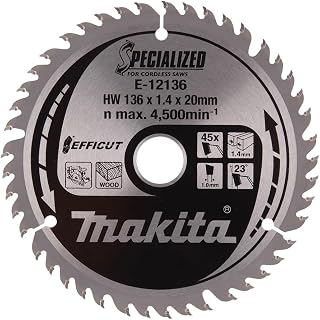
The category includes several Makita blade ranges designed for different cutting requirements. Makita Efficut blades are available in several diameters and tooth configurations, including 136mm, 165mm, 185mm, 190mm, 216mm, 260mm and 305mm models. Different tooth counts allow users to select a blade suited to the balance of cutting speed and finish required for their particular application.
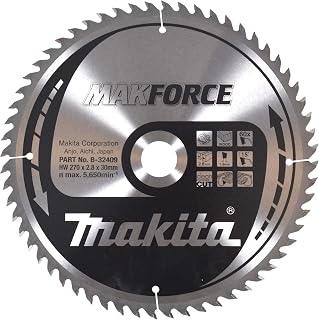
MAKFORCE TCT blades are also available in a variety of sizes and tooth counts. The selection includes examples such as 165mm x 30mm x 40T, 190mm x 30mm x 40T, 235mm x 30mm x 60T and 355mm x 30mm x 60T. These variations make it easier to compare blade specifications rather than selecting a replacement based solely on diameter.
Blade diameter is one of the first specifications to check. The replacement blade needs to be compatible with the saw and its maximum supported diameter. Popular Makita TCT blade sizes include 165mm, 190mm, 216mm, 235mm, 260mm and 305mm, although other sizes are available. Never fit a blade simply because it appears physically suitable; consult your machine's instructions and the blade manufacturer's compatibility information.
The bore is the central hole through which the blade mounts onto the saw spindle. Common specifications in this category include 20mm and 30mm, with some blades using 15.88mm. The bore must match the machine or be compatible with an approved reducer system. A correct diameter alone does not guarantee compatibility, so check the complete blade specification before purchasing.
Tooth count has a significant effect on cutting behaviour. Lower tooth counts are commonly associated with faster, more aggressive cutting, while higher tooth counts can be preferable where a finer finish is important. The category includes blades ranging from low-tooth options such as 12T and 16T through to higher-tooth models such as 45T, 60T, 63T and 100T. Select the tooth configuration according to the material, machine and desired result.
Tungsten carbide tipped teeth provide a hard cutting edge that is designed to withstand wear. Compared with basic steel cutting edges, carbide-tipped construction can offer useful longevity when the blade is used correctly for its intended application. This can make a TCT blade a practical choice for tradespeople, installers, carpenters, joiners and serious DIY users who regularly need consistent cutting performance.
A suitable blade can also help produce cleaner cuts and reduce unnecessary finishing work. However, blade performance depends on more than tooth material. Using the correct blade for the material, keeping the saw properly maintained and following the manufacturer's operating guidance are all important for achieving good results.
Start by identifying the exact blade specification recommended for your machine. Check the required diameter, bore size and maximum blade thickness or kerf where applicable. Next, consider what you are cutting and whether your priority is faster cutting or a finer finish. Tooth count and blade design should then be compared with the requirements of the job.
For example, a 165mm TCT blade may suit a compact saw designed around that diameter, while a larger 305mm blade may be intended for a different class of machine. Similarly, a high-tooth-count blade should not automatically be considered better than a lower-tooth-count model. The best choice is the one whose specification matches both the machine and the application.
Use this category to compare Makita TCT blades by size, tooth count and product range before checking the current listing details. The selection includes MAKFORCE, Efficut and other Makita TCT saw blade options, giving UK shoppers a practical starting point when replacing a worn blade or selecting a blade for a new cutting task.
Before ordering, verify the manufacturer's part number and all compatibility details against your saw. Product availability and pricing can change, so check the current retailer listing for the latest information. Choosing the correct specification first helps you avoid purchasing a blade that is unsuitable for your machine.
Find the right Makita TCT blade for accurate, efficient cutting across a wide range of applications. This category brings together Makita tungsten carbide tipped saw blades in different diameters, bore sizes and tooth configurations, including popular Efficut and MAKFORCE options. Whether you are replacing a blade for a circular saw, mitre saw or other compatible cutting machine, choosing the correct specification is essential for safe operation and a clean finished cut.