

Best DeWalt Jigsaw Blades for Precise Cutting Products online UK (United Kingdom)
Explore our real-time updated product directory index curated for performance, verified star metrics, and historical consumer trust rankings.








A suitable jigsaw blade can make a noticeable difference to cutting speed, finish quality and blade life. DeWalt jigsaw blades are available in different tooth configurations, materials, lengths and cutting profiles, allowing you to match the blade to the job rather than relying on a single general-purpose option. Whether you are cutting timber for a building project, trimming laminate, making curved cuts in sheet material or working with metal, selecting the correct blade helps achieve more predictable results.
Many jigsaw blades in this category use a T-Shank fitting, a widely used format designed for compatible jigsaws from DeWalt and other manufacturers. Always check your jigsaw's specification before purchasing replacement blades, as compatibility should be confirmed from the tool manufacturer's instructions. The product selection includes individual blades and multipacks, giving you the flexibility to keep commonly used blade types available in the workshop.
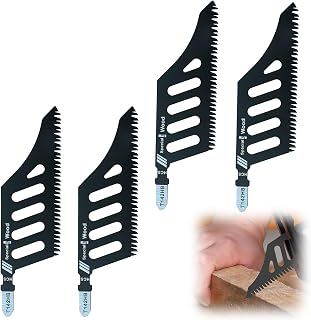
Wood-cutting jigsaw blades are available in several tooth patterns to suit different requirements. Coarser teeth can remove material quickly and are useful when speed is more important than achieving an exceptionally fine edge. Fine-tooth blades are better suited to applications where a cleaner finish is required, including furniture work, decorative cutting and thinner boards. Down-cutting profiles can also help reduce splintering on the visible surface of suitable materials when used correctly.
Blade length is another consideration when cutting timber. Standard blades are suitable for many everyday jobs, while longer blades can provide additional cutting depth for thicker workpieces. The correct length should be chosen according to the material thickness and the capabilities of the jigsaw being used. Avoid forcing a blade through the workpiece, as excessive pressure can affect cutting accuracy and increase wear.
Metal requires a different cutting approach from timber. Blades intended for metal commonly feature finer teeth and materials designed to withstand the demands of cutting sheet metal and other metal sections. High-speed steel and bi-metal constructions are among the options used for metal-cutting applications, with the appropriate choice depending on the material and thickness.
For metalwork, choosing the correct tooth configuration is particularly important. A blade with teeth that are too coarse may produce an uneven cut or place unnecessary stress on the blade. A finer blade can provide better control when cutting thinner sheet material. Follow the recommendations for your specific jigsaw and workpiece, and use suitable clamping and personal protective equipment during cutting.
DeWalt jigsaw blades can differ significantly in their construction. High carbon steel blades are commonly associated with wood applications, while high-speed steel and bi-metal options can provide increased suitability for metal and demanding cutting tasks. Bi-metal blades combine different metals to balance flexibility, durability and cutting performance.
Tooth geometry also influences performance. Straight-cut blades are useful for general cutting, while progressor or variable-tooth designs can combine different tooth sizes along the cutting edge. Blades designed for clean or scroll cutting can be preferable when the project involves tighter curves or requires a more refined finish. Selecting the blade according to the material, desired finish and cutting direction is often more effective than simply choosing the blade with the highest tooth count.
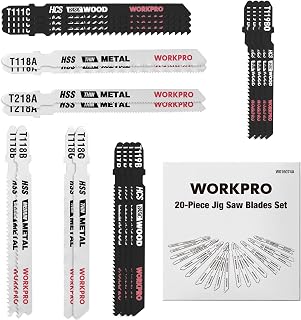
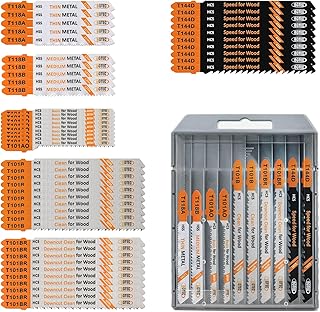
Multipacks can be a practical choice for users who regularly switch between materials and cutting styles. A mixed set may include blades for fast wood cutting, fine woodwork and metal applications, reducing the need to purchase individual blades every time the project changes. Smaller packs are useful when you already know which blade profile you need, while larger assortments can provide greater flexibility for general workshop use.
When comparing blade packs, look beyond the number of pieces. Check the included blade types, material compatibility, tooth pattern, length and fitting. A smaller pack containing the right specialist blades may be more useful than a larger assortment containing several profiles you rarely use.
Start by identifying the material you intend to cut and the finish you want to achieve. For fast timber cutting, consider a suitable coarse-tooth wood blade. For cleaner cuts, a finer profile may be preferable. For metal, select a blade specifically designed for the type and thickness of metal involved. If you frequently work with several materials, an assorted set can provide a convenient selection.
Also check the fitting and blade dimensions before ordering. T-Shank blades are common, but compatibility should never be assumed solely from the brand name. Consider blade length, cutting depth, tooth configuration and pack quantity as part of the same decision. With the correct DeWalt jigsaw blade fitted securely, you can work towards cleaner cuts, improved control and more efficient use of your jigsaw.
Choose the right DeWalt jigsaw blade for clean, controlled cutting across wood, metal, plastic, laminate and other common materials. From fine-tooth blades for neat finishes to aggressive blades for fast cutting, the range includes options for professional tradespeople, workshop users and DIY projects.