

Best Bosch Sanding Belts Products online UK (United Kingdom)
Explore our real-time updated product directory index curated for performance, verified star metrics, and historical consumer trust rankings.


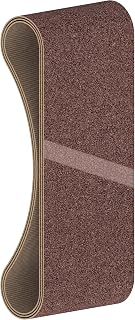


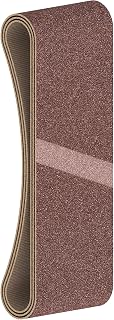


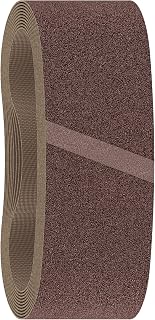


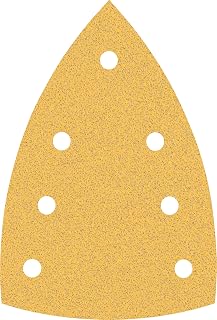

Bosch sanding belts are designed to provide a practical abrasive solution for powered sanding applications, helping users remove material efficiently and prepare surfaces for further work. The range available through this category includes belts in different dimensions and grit grades, making it easier to select an abrasive suited to your machine and the job in hand. From compact belts for smaller sanding equipment to wider belts for larger belt sanders, checking the specifications before ordering is essential.
For UK DIY users, tradespeople and workshop professionals, a suitable sanding belt can make a noticeable difference to both working speed and finish quality. Coarser abrasives are useful when you need to remove material quickly, level uneven timber or strip coatings, while finer grades are better suited to smoothing and preparing surfaces before painting, staining or finishing. Bosch abrasive belts are available for applications involving materials such as wood, hardwood, paint and, with suitable products, stainless steel and other metal surfaces.
One of the most important considerations when buying replacement sanding belts is compatibility with your machine. Sanding belts are specified by their width and overall length, so a belt that looks similar may not fit correctly if either measurement is different. Common Bosch options include sizes such as 40 x 303 mm, 40 x 305 mm, 60 x 400 mm, 65 x 410 mm, 75 x 480 mm, 75 x 533 mm and 100 x 560 mm, although the correct size depends on the specific sander or power file.
Before purchasing, check the dimensions of the existing belt or consult your machine's instructions. It is also worth checking whether your equipment requires a conventional belt sander belt, a narrower power-file belt or another specialist format. Correct sizing helps the belt track properly and reduces the risk of fitting problems during use.
Sanding belt grit determines how aggressively the abrasive cuts the surface. Lower grit numbers generally indicate a coarser abrasive, while higher numbers provide progressively finer sanding. Bosch sanding belts are available in grades including 40, 60, 80, 100, 120, 150, 180 and 220, depending on the product.
Coarse grades such as 40 or 60 grit are useful for heavier stock removal, stripping paint and working on rough timber. They can help tackle uneven surfaces quickly, but they leave a more pronounced sanding pattern and are normally followed by finer grades.
Medium grades around 80 to 120 grit offer a useful balance between material removal and surface refinement. They are suitable for many general-purpose woodworking and decorating preparation tasks, including smoothing timber and removing remaining surface imperfections after coarse sanding.
Fine grades such as 150, 180 and 220 grit are better suited to final smoothing and surface preparation. They can help reduce visible sanding marks before applying paint, stain, varnish or another finish. Using progressively finer abrasives can produce a more consistent surface than relying on one very coarse belt.
Many Bosch sanding belts are designed for applications involving wood, hardwood, paint and related materials. For woodworking projects, an abrasive belt can be used to remove material, smooth boards, level surfaces and prepare timber for finishing. When removing paint, selecting a suitable abrasive and using controlled pressure can help achieve efficient removal without unnecessarily damaging the underlying material.
For projects involving painted timber, a coarse or medium belt may be appropriate for initial removal, followed by a finer belt to improve the surface. Always select an abrasive that is suitable for the material and follow the operating guidance for your particular sanding machine.
The Bosch range includes professional abrasive products such as X440 sanding belts for wood and paint, as well as specialist Y580 belts designed for particular metalworking applications. These products are available in different dimensions and grit grades, so users can match the abrasive to the machine, material and desired result.
Some Bosch sanding belts are sold individually while others are supplied in packs or multi-piece sets. Multi-pack options can be useful for regular sanding work because different grit grades can be kept available for successive stages of a project. Mixed-grit sets can also provide a convenient starting point when several stages of surface preparation are required.
Start by identifying your sander or power file and checking its required belt dimensions. Next, consider the material you are sanding and the amount of material that needs to be removed. Choose a coarse grit for substantial removal, a medium grit for general smoothing and a fine grit for finishing work. If you are replacing an existing belt, matching both its dimensions and abrasive grade is a useful starting point.
For the best results, allow the sanding machine to do the work rather than applying excessive downward pressure. Keep the tool moving consistently across the workpiece and replace the belt when the abrasive becomes worn or performance drops. Using the correct Bosch sanding belt for the application can help maintain efficient sanding and achieve a cleaner, more predictable finish.
Explore the Bosch sanding belt range to compare available belt sizes, grit grades, pack quantities and application types. Whether you need belts for routine DIY sanding, woodworking, paint removal or more demanding workshop applications, checking compatibility and abrasive specifications before buying can help you select the most suitable option for your machine.
Find Bosch sanding belts for belt sanders and power files, with options in a range of sizes and abrasive grades. Whether you are removing old paint, smoothing timber or preparing a surface for finishing, choosing the right belt size and grit helps you achieve consistent sanding results.